




menu

Disaster Recovery Planning in Los Angeles – Protect Operations and Minimize Downtime with Expert Pre-Loss Strategies

United Water Damage Restoration Los Angeles delivers comprehensive disaster recovery planning for commercial facilities, ensuring business continuity through facility contingency planning, emergency response protocols, and pre-loss documentation tailored to Los Angeles's unique seismic and climate risks.

Slider Image 1
Slider Image 2
Slider Image 3
Slider Image 4
Slider Image 5
Slider Image 7
Slider Image 8
Slider Image 9
Slider Image 10
Slider Image 11

Why Los Angeles Facilities Need Disaster Recovery Planning Before Crisis Strikes

Los Angeles operates in a high-risk corridor. Seismic activity threatens structural integrity and plumbing systems. The region's aging infrastructure compounds vulnerability. Prolonged drought cycles followed by El Niño downpours create flash flooding scenarios that overwhelm storm drains and compromise building envelopes. For commercial operations, one unplanned water intrusion event can halt production, trigger liability claims, and devastate quarterly revenue.

Business continuity planning is not optional in this market. Facilities without pre-loss planning face delayed insurance claims, extended downtime, and regulatory penalties. Los Angeles County enforces strict environmental compliance codes for water discharge during restoration. Facilities that lack commercial emergency response planning cannot move fast enough to prevent mold colonization within 48 hours or meet Cal/OSHA documentation requirements during emergency mitigation.

The gap between reaction and preparedness is measured in lost revenue. A server room flood in Century City or a pipe burst in a Downtown LA high-rise can cascade into six-figure losses within hours. Facility contingency planning establishes clear escalation protocols, vendor contact hierarchies, and documented asset inventories before disaster strikes. Disaster restoration planning integrates with existing safety and risk management frameworks to create a unified response architecture.

United Water Damage Restoration Los Angeles works with property managers, facility directors, and corporate risk officers to build executable plans that account for Los Angeles's specific threats. We map vulnerabilities, document critical systems, and establish response benchmarks that protect both physical assets and operational continuity.

Why Los Angeles Facilities Need Disaster Recovery Planning Before Crisis Strikes
How We Build Commercial Disaster Recovery Plans That Actually Work

How We Build Commercial Disaster Recovery Plans That Actually Work

Our approach begins with a facility risk assessment. We walk the property, identify water sources, map drainage patterns, and document mechanical systems. We note the location of shutoff valves, electrical panels, HVAC systems, and high-value equipment. This physical audit creates a baseline for all subsequent planning. We photograph critical areas and create digital floor plans that show water flow paths during different failure scenarios.

Next, we develop emergency response protocols. These protocols assign roles, establish communication chains, and define decision authority. Who calls the restoration contractor? Who contacts insurance? Who coordinates with tenants or employees? We answer these questions in advance. The protocol includes vendor contact sheets, insurance policy numbers, and municipal permit requirements specific to Los Angeles County.

We then create pre-loss documentation. This includes equipment serial numbers, purchase dates, and replacement values for insurance claims. We photograph interiors, document finishes, and catalog inventory. This documentation accelerates claims processing and eliminates disputes over pre-existing conditions. It also satisfies Los Angeles's strict environmental documentation requirements for wastewater extraction and disposal.

Finally, we integrate the plan with your existing safety and operational systems. We train facility staff on shutoff procedures, review evacuation routes, and conduct tabletop exercises. We provide laminated quick-reference cards for mechanical rooms and update the plan annually to reflect tenant changes, equipment upgrades, or code revisions. The result is a living document that reduces response time from hours to minutes.

How Disaster Recovery Planning Works for Your Facility

Disaster Recovery Planning in Los Angeles – Protect Operations and Minimize Downtime with Expert Pre-Loss Strategies
01

Facility Risk Assessment

We conduct a comprehensive on-site evaluation of your Los Angeles facility. Our team maps water sources, identifies high-risk zones, documents mechanical systems, and photographs critical infrastructure. We note shutoff valve locations, drainage capacities, and potential failure points. This assessment creates a detailed vulnerability profile that informs all subsequent planning stages and establishes baseline conditions for insurance documentation.
02

Response Protocol Development

We build customized emergency response protocols that assign roles, establish communication hierarchies, and define escalation procedures. The protocol includes vendor contact information, insurance policy details, and Los Angeles County permit requirements. We create decision trees for different disaster scenarios, from pipe bursts to seismic events. Staff receive training on shutoff procedures and documentation requirements. This preparation eliminates confusion during actual emergencies.
03

Plan Integration and Training

We integrate the disaster recovery plan with your existing safety and operational systems. Facility teams receive hands-on training, including tabletop exercises that simulate real incidents. We provide quick-reference materials for mechanical rooms and common areas. The plan undergoes annual reviews to reflect tenant changes, equipment upgrades, and code revisions. You receive both digital and physical copies, ensuring accessibility during power outages or system failures.

Why Los Angeles Facilities Trust United Water Damage Restoration for Pre-Loss Planning

Los Angeles demands local expertise. We understand the seismic retrofit requirements for older buildings in Historic Districts. We know which neighborhoods face the highest flood risk during atmospheric river events. We work daily with Los Angeles County Environmental Health officials and understand their wastewater disposal protocols. This local knowledge prevents plan failures during real incidents.

Our team has managed large-loss commercial water damage events across Downtown LA, Century City, and the Port of Los Angeles industrial corridor. We have restored manufacturing facilities, medical campuses, and high-rise office towers. This field experience informs every disaster recovery plan we create. We know which insurance carriers operate in this market, which local contractors can mobilize equipment at 2 AM, and which permit offices stay open during declared emergencies.

We also understand business continuity planning from an operational perspective. Our plans account for supply chain disruptions, employee displacement, and temporary facility relocation. We identify alternate vendors, backup equipment sources, and interim workspace options before you need them. This operational focus separates our planning from generic templates sold by out-of-state consultants who lack ground-level knowledge of Los Angeles's commercial real estate market.

United Water Damage Restoration Los Angeles maintains relationships with structural engineers, industrial hygienists, and environmental consultants throughout the region. When disaster strikes, these relationships accelerate response and reduce decision paralysis. Your facility gains access to a network of verified specialists who understand Los Angeles's regulatory environment and can mobilize immediately.

What Your Disaster Recovery Planning Engagement Includes

Assessment and Documentation Timeline

The initial facility risk assessment takes between four and eight hours, depending on building size and complexity. Multi-building campuses require additional time. We schedule assessments during off-hours to avoid disrupting operations. You receive a preliminary vulnerability report within 48 hours, followed by a complete disaster recovery plan within two weeks. Rush timelines are available for facilities facing immediate risk or undergoing ownership transitions. Annual plan updates take two to four hours and include revised documentation and staff retraining.

Comprehensive Facility Evaluation Process

Our evaluation examines every water-related system in your facility. We inspect domestic water lines, fire suppression systems, HVAC condensate drains, and roof drainage infrastructure. We test shutoff valves for functionality and note any maintenance deficiencies. We review building plans to identify concealed plumbing and locate backflow preventers. We photograph high-value equipment and document surrounding conditions. This thoroughness ensures the plan addresses actual vulnerabilities rather than assumptions. The evaluation also satisfies pre-loss documentation requirements for most commercial insurance policies.

Actionable Emergency Response Plan

You receive a complete disaster recovery plan in both digital and printed formats. The plan includes annotated floor plans, equipment inventories, vendor contact lists, and step-by-step response protocols. Quick-reference guides are designed for posting in mechanical rooms and common areas. Staff training materials include video demonstrations of shutoff procedures and documentation checklists. The plan integrates with your existing emergency operations center protocols and satisfies Los Angeles County's commercial emergency preparedness requirements. Updates are provided annually or following significant facility modifications.

Ongoing Plan Maintenance and Support

Disaster recovery plans require regular updates to remain effective. We schedule annual reviews to document tenant changes, equipment replacements, and staff turnover. We update vendor contact information and verify insurance policy details. Facilities undergoing renovations receive interim plan updates at no additional cost. We also provide 24/7 consultation access during actual disaster events. If your facility experiences water intrusion, our team references your pre-loss documentation to accelerate response and claims processing. This ongoing relationship ensures your plan remains a functional tool rather than a static document.

Frequently Asked Questions

You Have Questions,
We Have Answers

What are the 5 steps of disaster recovery planning? +

The five steps are risk assessment, business impact analysis, recovery strategy development, plan documentation, and testing. Start by identifying threats specific to Los Angeles like earthquakes, wildfires, and infrastructure failures. Analyze which operations are mission-critical and quantify downtime costs. Develop recovery procedures that prioritize business continuity. Document roles, contact lists, and step-by-step protocols. Test the plan quarterly through tabletop exercises or simulations. Los Angeles businesses must account for regional risks including seismic activity and water damage from aging infrastructure. Regular updates ensure your plan remains effective as your operations evolve and new threats emerge.

What is disaster and recovery planning? +

Disaster and recovery planning is a documented framework that enables businesses to maintain or quickly resume operations after disruptive events. It identifies critical systems, establishes recovery time objectives, and assigns responsibilities. For Los Angeles commercial properties, this includes protocols for earthquakes, fires, floods, and utility failures. The plan covers data backup, alternate work locations, supply chain contingencies, and communication procedures. Effective planning reduces downtime, protects revenue, and limits liability exposure. It addresses both IT infrastructure and physical operations. Los Angeles businesses face unique challenges including seismic risk and regulatory requirements that demand specialized recovery strategies tailored to local conditions.

What are the 4 C's of disaster recovery? +

The four C's are command, control, communication, and coordination. Command establishes clear authority and decision-making hierarchy during crisis response. Control implements procedures that manage resources and operations effectively. Communication ensures stakeholders receive timely, accurate information through predetermined channels. Coordination aligns internal teams, vendors, and emergency services. For Los Angeles businesses, coordination includes working with municipal emergency management during regional events like earthquakes or wildfires. These elements prevent chaos and ensure systematic response. Your plan must define who commands recovery efforts, how you control critical processes, which communication platforms you use, and how you coordinate with building management or adjacent tenants.

What should be in a disaster recovery plan? +

A comprehensive disaster recovery plan includes risk assessment, business impact analysis, recovery procedures, contact information, and resource inventory. Document recovery time objectives for each critical function. List alternate facilities, backup systems, and vendor agreements. Include communication protocols for employees, clients, and stakeholders. Map dependencies between systems and processes. For Los Angeles operations, address seismic safety procedures, water damage response, and evacuation routes. Include insurance policy details and regulatory compliance requirements. Assign specific roles with backup personnel identified. Store physical and digital copies offsite. The plan should cover both immediate response actions and long-term recovery phases to minimize business interruption and financial loss.

What are the 4 pillars of disaster recovery? +

The four pillars are prevention, preparedness, response, and recovery. Prevention reduces risk through facility hardening, redundant systems, and insurance coverage. Preparedness includes training, plan documentation, and resource stockpiling. Response activates immediate actions to protect people and assets during the event. Recovery restores normal operations and addresses long-term impacts. Los Angeles businesses must emphasize seismic prevention through building retrofits and secured equipment. Preparedness accounts for regional infrastructure vulnerabilities. Response protocols address multi-hazard scenarios common to Southern California. Recovery planning considers supply chain disruptions and potential displacement from damaged facilities. Each pillar requires specific investments and ongoing maintenance to ensure organizational resilience.

What are the 5 P's of disaster? +

The five P's are people, property, processes, partners, and profit. People includes employee safety, communication, and continuity of leadership. Property covers physical assets, facilities, and equipment protection. Processes addresses critical workflows and operational procedures. Partners encompasses vendors, suppliers, and service providers who support your operations. Profit focuses on revenue protection and financial recovery. Los Angeles businesses must consider earthquake safety for people, seismic retrofitting for property, and supply chain resilience for partners. Each element requires specific strategies. Document how you protect employees, secure facilities, maintain operations, manage external dependencies, and preserve cash flow. Neglecting any single element creates organizational vulnerability and extends recovery time.

What is a disaster recovery plan template? +

A disaster recovery plan template is a structured framework that guides businesses in documenting recovery procedures and protocols. It includes sections for risk assessment, contact lists, recovery procedures, resource inventory, and communication plans. Templates standardize planning across departments and ensure nothing gets overlooked. For Los Angeles commercial operations, templates should include sections addressing regional hazards like earthquakes and wildfires. Customize templates to your industry, facility type, and regulatory requirements. Include appendices for vendor agreements, floor plans, and system diagrams. Templates accelerate plan development but require customization to your specific operations, vulnerabilities, and recovery objectives. Generic templates without local adaptation provide limited value during actual events.

How much does a DRP cost? +

Disaster recovery planning costs vary based on business size, complexity, and desired resilience level. Investment includes consultant fees, redundant systems, alternate facilities, insurance premiums, training, and testing exercises. Small businesses might invest several thousand dollars for basic planning. Mid-sized operations often allocate tens of thousands for comprehensive programs. Enterprise-level planning with hot sites and full redundancy reaches six figures. Los Angeles businesses face higher costs for seismic-resistant infrastructure and premium facility locations. Calculate costs against potential downtime losses. Most businesses find that planning costs represent a fraction of revenue at risk during extended outages. Staged implementation helps manage budget constraints.

How do you create a DRP? +

Create a disaster recovery plan by conducting risk assessment, performing business impact analysis, documenting recovery procedures, assigning responsibilities, and testing protocols. Start by identifying threats relevant to Los Angeles including earthquakes, fires, and infrastructure failures. Quantify maximum tolerable downtime for each critical function. Develop step-by-step recovery procedures with specific technical instructions. Establish communication trees and alternate decision-makers. Document vendor contacts and mutual aid agreements. Store copies offsite and in cloud systems. Train employees on their roles. Test through tabletop exercises and simulations. Update quarterly as operations change. Engage department heads to ensure accuracy. Professional consultation helps identify gaps and ensures regulatory compliance.

What is a common disaster recovery strategy? +

A common disaster recovery strategy combines data backup, alternate work locations, and redundant systems to maintain business continuity. Most organizations implement regular offsite backups with cloud storage. Many establish mutual aid agreements or maintain hot site subscriptions for alternate facilities. Critical systems run with redundant components to eliminate single points of failure. For Los Angeles businesses, strategies must address seismic risk through equipment anchoring and structural reinforcement. Cloud-based operations provide geographic separation from regional events. The strategy balances recovery speed against cost. Define recovery time objectives, then select technologies and arrangements that meet those targets while fitting budget constraints. Regular testing validates strategy effectiveness.

How Los Angeles's Seismic Risk and Aging Infrastructure Demand Proactive Facility Contingency Planning

Los Angeles sits on multiple active fault lines. Seismic events compromise pipe joints, crack slab foundations, and damage backflow preventers. The region's aging water infrastructure, much of it installed before 1970, increases failure risk during ground motion. Buildings constructed before modern seismic codes lack flexible pipe couplings and adequate bracing. This combination creates cascading water damage scenarios during earthquakes. Facilities without pre-loss planning cannot isolate damaged sections quickly, leading to catastrophic flooding in adjacent spaces and prolonged downtime while engineers assess structural integrity.

United Water Damage Restoration Los Angeles maintains active relationships with the city's Department of Building and Safety and understands local permit requirements for emergency water extraction. We work regularly with structural engineers who specialize in post-seismic building assessments. Our team knows which Los Angeles neighborhoods face the highest risk from liquefaction and which building types require additional monitoring. This local expertise ensures your disaster recovery plan addresses region-specific threats rather than generic scenarios. Commercial clients throughout Downtown LA, Century City, and the Westside rely on our knowledge of local codes and municipal response protocols.
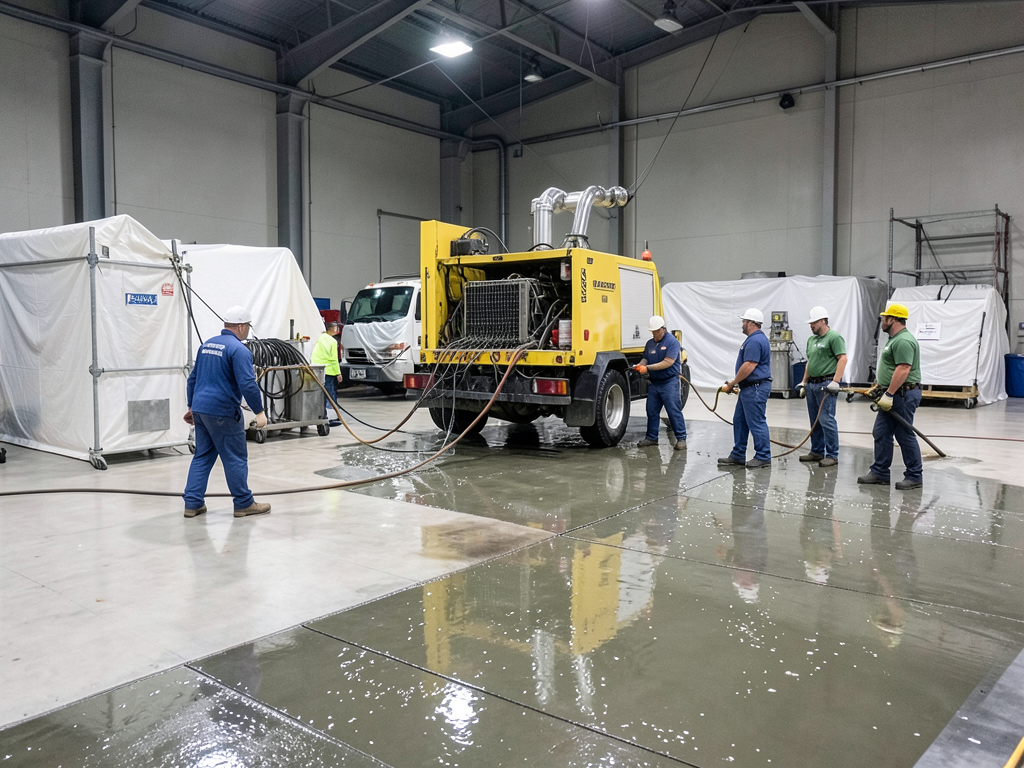

Water Damage Restoration Services in The Los Angeles Area

United Water Damage Restoration Los Angeles is proud to service the entire Los Angeles area and surrounding communities. View our central location on the map to see our strategic positioning, which enables us to provide our guaranteed rapid response times across the region. If you need immediate assistance, please do not drive to our office; instead, call our 24/7 emergency hotline, and our fully-equipped team will be dispatched directly to your property without delay.

Address:
United Water Damage Restoration Los Angeles, 5800 S Eastern Ave, Los Angeles, CA, 90040

Additional Services We Offer

Our news updates

Latest Articles & News from The Blogs

What to Do When Your Wilmington Water Heater Floods Your Laundry Room A leaking water heater can release 40 to…

What to Do When Your Wilmington Water Heater Floods Your Laundry Room

What to Do When Your Wilmington Water Heater Floods Your Laundry Room A leaking water heater can release 40 to…

Getting Your West Hills Home Ready for the Los Angeles Rainy Season

Getting Your West Hills Home Ready for the Los Angeles Rainy Season The Santa Susana Mountains loom over West Hills…

Common Plumbing Problems in Miracle Mile Older Condo Buildings

Common Plumbing Problems in Miracle Mile Older Condo Buildings Miracle Mile’s charming historic condo buildings come with unique plumbing challenges…

Contact Us

Do not wait for a water emergency to expose gaps in your preparedness. Contact United Water Damage Restoration Los Angeles at (209) 255-2558 for a facility risk assessment. We deliver disaster recovery plans that protect operations, accelerate insurance claims, and minimize downtime.