



menu

Hardwood Floor Water Damage in Los Angeles – Expert Diagnosis and Precision Drying to Save Your Floors

When water seeps into hardwood floors, you need specialists who understand Los Angeles humidity patterns and use moisture mapping technology to prevent cupping, warping, and permanent structural damage.

Slider Image 1
Slider Image 2
Slider Image 3
Slider Image 4
Slider Image 5
Slider Image 7
Slider Image 8
Slider Image 9
Slider Image 10
Slider Image 11

Why Los Angeles Hardwood Floors Are Vulnerable to Water Damage

Los Angeles residents love hardwood floors. They add value and character to homes from Silver Lake bungalows to Pacific Palisades estates. But when water intrudes, even for a few hours, your investment is at risk.

Wet hardwood flooring absorbs moisture unevenly. The wood swells, buckles, and separates from the subfloor. In Los Angeles, where many homes were built between the 1920s and 1950s, original hardwood often sits directly on concrete slabs or pier-and-beam foundations. These older installations lack modern vapor barriers. When a pipe bursts, dishwasher leaks, or Santa Ana wind-driven rain enters through a poorly sealed window, water migrates quickly beneath the surface.

You see hardwood floor cupping first. The edges of each plank rise higher than the center, creating a washboard texture. Left untreated, cupping turns into crowning, where the center bulges upward. Both conditions indicate trapped moisture in the wood fibers and subfloor. The damage accelerates in Los Angeles's mild climate because humidity fluctuates seasonally, and homeowners often run air conditioning intermittently. This creates a wet-dry cycle that stresses wood grain.

Water damaged wood floors also become breeding grounds for mold. Spores colonize within 48 hours if moisture content stays above 20 percent. The longer water sits, the more extensive the wood floor water damage repair becomes. Some floors can be saved with aggressive drying. Others require removal and replacement. The difference comes down to response time and professional moisture extraction.

Why Los Angeles Hardwood Floors Are Vulnerable to Water Damage
How We Restore Water Damaged Hardwood Floors

How We Restore Water Damaged Hardwood Floors

Drying hardwood floors is not a fan-and-wait operation. It requires precision moisture monitoring, controlled evaporation, and subfloor intervention.

We start with a moisture meter inspection. We test the surface moisture of each affected plank, then use penetrating probes to measure moisture content in the subfloor and joists. This creates a moisture map. We know exactly where water pooled and where it migrated. If moisture reads above 12 percent in the hardwood or above 19 percent in the subfloor, we deploy targeted drying equipment.

For surface water, we use floor mat drying systems. These rubber mats create a sealed environment over the hardwood. We pull air across the wood surface and beneath the mats simultaneously, accelerating evaporation without overheating the planks. Overheating causes further cupping and finish damage.

For subsurface moisture, we drill weep holes between planks and insert drying tubes. This forces airflow into the subfloor cavity, pulling moisture out from below. In severe cases, we remove baseboards and inject heated air into wall cavities to dry the perimeter of the room.

We monitor moisture levels every 12 hours. Hardwood must dry slowly to prevent cracking and separation. If we detect mold growth during the process, we apply antimicrobial treatment to affected areas. Once moisture levels stabilize at 8 to 10 percent, we assess whether the floor has returned to its original profile or if sanding and refinishing is required. Some cupping reverses naturally as the wood dries. Other cases require professional leveling and surface restoration.

What Happens When You Call Us for Hardwood Floor Water Damage

Hardwood Floor Water Damage in Los Angeles – Expert Diagnosis and Precision Drying to Save Your Floors
01

Emergency Water Extraction

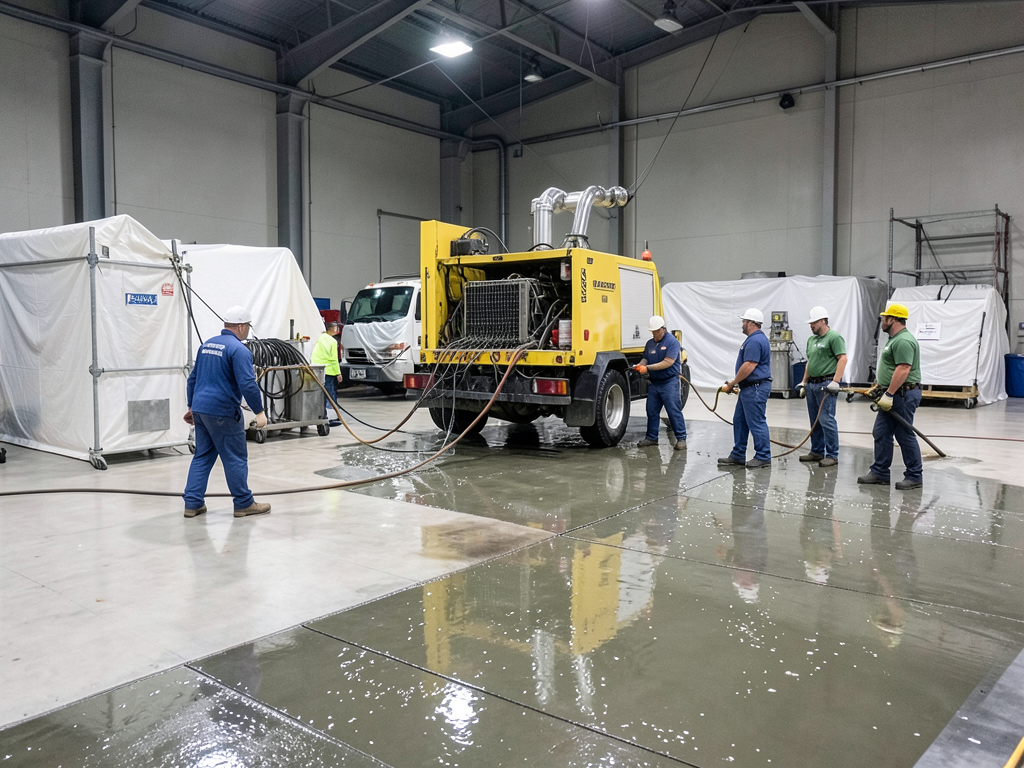
We arrive within two hours of your call. Our team removes standing water using truck-mounted extraction units, then deploys moisture meters to measure water penetration depth in your hardwood and subfloor. We document moisture readings in every affected room and photograph damage patterns for insurance documentation. This baseline data guides our drying strategy and helps you file claims accurately.
02

Controlled Drying and Monitoring

We position commercial dehumidifiers and floor drying mats to create negative air pressure over your hardwood. Air movers pull moisture from the wood without causing thermal shock. We monitor moisture levels twice daily using calibrated hygrometers and adjust airflow as needed. If subfloor moisture remains elevated after 48 hours, we drill ventilation access points to dry the cavity beneath your flooring.
03

Floor Stabilization and Assessment

Once moisture content drops to acceptable levels, we evaluate whether your hardwood has returned to its original form. Minor cupping often corrects itself as the wood dries. Severe warping or crowning may require sanding and refinishing. We provide a detailed assessment of salvageable planks versus sections that need replacement. You make the final decision on repair scope based on our findings.

Why Los Angeles Homeowners Trust Us with Hardwood Floor Restoration

Hardwood floor water damage repair in Los Angeles requires knowledge of local construction methods. Many older homes in neighborhoods like Los Feliz, West Adams, and Hancock Park feature tongue-and-groove oak floors installed over diagonal sheathing. These floors were face-nailed, not blind-nailed, which creates unique moisture trapping points. We understand how water moves through these older assemblies and where to focus drying efforts.

We also know Los Angeles building codes. If your subfloor sustained structural damage, repairs must meet current IRC standards for joist spacing, sheathing thickness, and fastener placement. We coordinate with licensed contractors when structural work is required and ensure all repairs pass inspection.

United Water Damage Restoration Los Angeles has worked with local insurance adjusters for years. We document damage using industry-standard IICRC protocols, which means your claim is more likely to be approved without disputes. We photograph moisture readings, provide daily logs, and deliver detailed scope-of-work estimates that align with Xactimate pricing. This saves you from having to fight for coverage or pay out-of-pocket for repairs that should be covered.

We also respond fast. In Los Angeles, where water damage can escalate quickly due to fluctuating indoor humidity levels, every hour matters. We dispatch crews within two hours of your call, even on weekends and holidays. Our trucks carry floor drying equipment, moisture meters, and antimicrobial treatments so we can start work immediately. No waiting for equipment rentals or second visits. We bring everything needed to stop damage progression and begin restoration on day one.

What to Expect During Hardwood Floor Water Damage Restoration

Response Time and Availability

We operate 24 hours a day, seven days a week. When you call our emergency line at (209) 255-2558, you speak directly with a dispatcher who sends a crew to your location within two hours. We do not use answering services or schedule callbacks. Our technicians carry fully stocked trucks with water extraction equipment, moisture meters, dehumidifiers, and floor drying systems. We start work the moment we arrive. For after-hours emergencies, our rates remain the same. No surge pricing or weekend premiums. You get the same expert service whether you call at noon on Tuesday or 2 a.m. on Saturday.

Moisture Assessment and Diagnosis

Our initial assessment takes 45 to 90 minutes depending on the size of the affected area. We test moisture content in hardwood planks, subfloor material, and wall cavities using both surface meters and penetrating probes. We check for hidden water migration along baseboards and under cabinets. We also inspect your HVAC system to ensure it is not circulating humid air that will slow drying. You receive a written moisture map with readings for each room, plus a drying timeline based on current conditions. We explain what equipment we will use and why each piece is necessary for your specific flooring type and moisture levels.

Quality of the Final Outcome

Our goal is to save your hardwood floors whenever possible. We dry wood slowly to prevent cracking, splitting, and finish damage. If cupping has occurred, we allow the wood to stabilize for 7 to 10 days after drying is complete. Many cases of minor cupping reverse naturally during this period. If the floor remains uneven, we recommend professional sanding and refinishing to restore the surface. We do not perform refinishing ourselves, but we refer you to trusted local craftsmen who specialize in historic hardwood restoration. Your floor should look and perform like new once repairs are complete.

Follow-Up and Documentation

We provide detailed documentation for insurance claims. This includes moisture readings, photographs of damage progression, equipment logs, and daily drying reports. We also offer a final moisture certification once your floors reach safe levels. This document confirms that no residual moisture remains and that mold risk has been eliminated. If you experience any issues after we complete the job, we return to reassess at no charge. We also offer annual moisture inspections for clients who want peace of mind. These inspections catch early signs of leaks or humidity problems before they cause visible damage.

Frequently Asked Questions

You Have Questions,
We Have Answers

Can hardwood floors be repaired after water damage? +

Yes, hardwood floors can often be repaired after water damage if you act quickly. Minor water exposure may only require drying and refinishing. More severe damage might need board replacement. The key is speed. Extract standing water within 24 hours, then dry the subfloor and boards completely using industrial fans and dehumidifiers. In Los Angeles, where humidity levels fluctuate, professional moisture meters help determine when wood reaches safe levels. Cupping and crowning can sometimes reverse as boards dry. If warping persists or structural integrity is compromised, selective board replacement preserves your floor without full replacement.

What happens if hardwood floors get wet? +

When hardwood floors get wet, wood fibers absorb moisture and expand. This causes cupping, where board edges rise higher than centers. Prolonged exposure leads to warping, buckling, and discoloration. Water seeps between boards and penetrates the subfloor, creating hidden pockets where mold thrives. In Los Angeles homes, especially older properties with inadequate vapor barriers, moisture migrates beneath the surface. Finish coatings blister and peel. If water sits longer than 48 hours, permanent staining and structural damage occur. The subfloor may rot, compromising your home's foundation. Quick extraction and proper drying prevent most long-term damage.

How to flatten a wood floor after water damage? +

Flattening a wood floor after water damage requires controlled drying and professional assessment. First, remove all surface water and run commercial dehumidifiers to pull moisture from the wood slowly. Do not force-dry with heat, as this causes splitting. Monitor moisture content with a meter until it matches surrounding unaffected boards. In Los Angeles, where coastal humidity varies, drying takes 7 to 14 days. Once dry, minor cupping may self-correct. For persistent warping, sand the floor after complete stabilization, then refinish. Severe cases require board replacement. Never sand until moisture levels normalize completely.

Will insurance pay for water damage to a wood floor? +

Insurance coverage for water-damaged wood floors depends on the cause. Sudden, accidental events like burst pipes or appliance failures typically qualify under homeowners policies. Gradual leaks, poor maintenance, or flood damage usually do not. In Los Angeles, where plumbing in older homes often fails unexpectedly, document the damage immediately with photos. File your claim within 48 hours. Your adjuster will inspect moisture levels and determine covered losses. Many policies exclude subfloor damage or limit payouts to actual cash value. Review your policy's water damage exclusions and consider a separate flood policy if you live near waterways.

How much does it cost to repair a water damaged hardwood floor? +

Repair costs for water-damaged hardwood floors in Los Angeles range widely based on damage severity and floor type. Minor refinishing after quick drying costs less than extensive board replacement. Factors include moisture depth, subfloor condition, wood species, and square footage. Exotic hardwoods cost more to match and replace. Labor rates in Los Angeles run higher than national averages. Hidden damage beneath the surface often increases final costs. Emergency water extraction, drying equipment, mold remediation, and refinishing all add expenses. Get a professional moisture assessment before committing to repairs. Minor damage caught early saves thousands compared to delayed response.

Can mold grow under hardwood floors? +

Yes, mold grows rapidly under hardwood floors when moisture is present. Wood subfloors and the dark, enclosed space between flooring and foundation create ideal mold conditions. Mold spores colonize within 24 to 48 hours of water exposure. In Los Angeles, where many homes lack proper crawlspace ventilation, trapped moisture accelerates growth. You will smell musty odors before seeing visible mold. Black staining on board undersides indicates active colonies. Mold releases spores into your indoor air, causing respiratory issues. Professional remediation requires removing affected boards, treating subfloors with antimicrobial solutions, and correcting moisture sources before reinstalling flooring.

Will a one-time water leak cause mold? +

A one-time water leak can cause mold if moisture lingers longer than 48 hours. Even brief flooding saturates porous materials like wood subfloors and drywall. If you extract water quickly and dry affected areas completely, mold growth is preventable. In Los Angeles, where humidity stays relatively low, surface drying happens faster than in humid climates. The danger lies beneath hardwood floors, where hidden moisture pools undetected. Mold needs only moisture, oxygen, and organic material to thrive. A single leak that soaks subflooring and remains undried creates long-term contamination. Always use moisture meters to confirm complete drying after any water event.

How long does it take for water to dry under hardwood floors? +

Water takes 7 to 14 days to dry completely under hardwood floors, depending on damage severity and drying conditions. Surface water may disappear in 24 hours, but moisture trapped in subfloors and between boards requires industrial dehumidifiers and air movers. In Los Angeles, lower humidity accelerates drying compared to coastal or humid regions. Thick hardwood or engineered floors with sealed edges slow moisture release. Professional drying equipment creates airflow beneath boards and monitors moisture content daily. Never assume visible dryness means complete drying. Moisture meters must show readings below 12 percent before repairs begin. Rushing this process causes mold and permanent warping.

What do water-damaged hardwood floors look like? +

Water-damaged hardwood floors show distinct visual signs. Cupping occurs when board edges curl upward, creating a concave surface. Crowning is the opposite, with board centers rising higher. Dark staining appears along seams where water penetrated. White hazy spots indicate moisture trapped beneath the finish. Buckling means boards pulled away from the subfloor, creating raised sections. In Los Angeles homes with red oak or maple, tannin bleeding causes black discoloration. Finishes appear cloudy, blistered, or peeling. You may notice gaps between boards as wood contracts after drying. Musty odors signal hidden mold growth underneath.

How to fix swollen hardwood floors? +

Fixing swollen hardwood floors starts with identifying and stopping the moisture source. Remove standing water immediately, then run dehumidifiers and fans continuously. Monitor moisture content daily with a meter. Allow boards to dry naturally for 7 to 14 days. In Los Angeles, where air is drier, boards may self-correct as they release moisture. Minor swelling often reverses without intervention. For persistent swelling, sand the floor after complete drying, removing high spots and refinishing. Severe cases require removing and replacing damaged boards. Never sand wet or damp wood. Patience during drying prevents permanent damage and costly board replacement.

How Los Angeles's Concrete Slab Foundations Complicate Hardwood Floor Water Damage

Most post-war homes in Los Angeles were built on concrete slab foundations. When water damage occurs, moisture seeps into the slab and remains trapped beneath hardwood flooring for weeks. Unlike pier-and-beam foundations that allow airflow beneath the floor, slabs create a sealed environment where moisture cannot evaporate naturally. This is why wet hardwood flooring in Los Angeles often requires subsurface drying methods like weep hole ventilation and negative air pressure systems. Without these techniques, mold colonizes the subfloor, and wood floor water damage repair becomes far more extensive than it needs to be.

Los Angeles also enforces strict mold remediation standards under California Health and Safety Code Section 17920.3. If water damage leads to mold growth exceeding 10 square feet, remediation must follow California Department of Public Health guidelines. We adhere to these protocols and provide documentation that satisfies both insurance carriers and local health inspectors. Our technicians are trained in IICRC S520 mold remediation standards, which means your hardwood floor restoration meets or exceeds all regulatory requirements. This protects you from liability and ensures your home remains safe.
Water Damage Restoration Services in The Los Angeles Area

United Water Damage Restoration Los Angeles is proud to service the entire Los Angeles area and surrounding communities. View our central location on the map to see our strategic positioning, which enables us to provide our guaranteed rapid response times across the region. If you need immediate assistance, please do not drive to our office; instead, call our 24/7 emergency hotline, and our fully-equipped team will be dispatched directly to your property without delay.

Address:
United Water Damage Restoration Los Angeles, 5800 S Eastern Ave, Los Angeles, CA, 90040

Additional Services We Offer

Our news updates

Latest Articles & News from The Blogs

What to Do When Your Wilmington Water Heater Floods Your Laundry Room A leaking water heater can release 40 to…

What to Do When Your Wilmington Water Heater Floods Your Laundry Room

What to Do When Your Wilmington Water Heater Floods Your Laundry Room A leaking water heater can release 40 to…

Getting Your West Hills Home Ready for the Los Angeles Rainy Season

Getting Your West Hills Home Ready for the Los Angeles Rainy Season The Santa Susana Mountains loom over West Hills…

Common Plumbing Problems in Miracle Mile Older Condo Buildings

Common Plumbing Problems in Miracle Mile Older Condo Buildings Miracle Mile’s charming historic condo buildings come with unique plumbing challenges…

Contact Us

Water damage spreads fast. Every hour increases the risk of cupping, mold, and subfloor rot. Call United Water Damage Restoration Los Angeles now at (209) 255-2558. We dispatch crews immediately and bring all equipment needed to save your floors.