Water Damage Mitigation Strategies for Sound Stages and Production Facilities in Burbank
Burbank’s entertainment industry faces unique water damage risks. Sound stages contain millions in specialized equipment, from high-voltage lighting rigs to sensitive audio recording gear. A single water incident can halt production schedules, costing thousands per hour in lost revenue. This guide covers the specific strategies needed to protect Burbank’s production facilities from water damage while minimizing downtime and preserving expensive equipment. Expert Help for Water Damage Restoration in Venice Beach Properties.
The first 60 minutes after water detection determines whether a sound stage can resume production within hours or face weeks of costly repairs. Burbank’s Media District sound stages operate on tight schedules with multiple productions running simultaneously. Water damage here requires specialized knowledge of acoustic insulation, electrical systems, and the delicate balance between rapid drying and equipment preservation. EPA Mold Remediation Guidelines.
Unique Water Damage Risks for Burbank Sound Stages
Burbank sound stages face distinct vulnerabilities compared to standard commercial buildings. The combination of aging infrastructure, high electrical loads, and specialized construction materials creates complex failure patterns.
Many Burbank sound stages date back to the 1930s-1960s when plumbing systems used galvanized steel pipes. These pipes corrode from the inside out, creating weak points that fail under pressure. The Media District’s older sound stages often have hidden pipe runs within walls that feed multiple sets, meaning a single leak can affect several production areas simultaneously.
Acoustic insulation in sound stages presents another challenge. These specialized materials absorb moisture rapidly and can harbor mold within 24-48 hours. Unlike standard fiberglass, acoustic insulation often contains fire-retardant chemicals that complicate drying procedures. Removing and replacing this material requires careful handling to avoid contaminating the entire stage.
High-voltage electrical systems in sound stages create additional hazards. Water conducts electricity efficiently, and the massive power requirements for lighting and equipment mean extensive wiring networks throughout the facility. Even minimal water exposure to electrical components can cause catastrophic failures. Immediate Water Damage Cleanup Services for Businesses in Downtown LA.
Emergency Response Protocols for Production Facilities
When water damage strikes a Burbank sound stage, every minute counts. The response protocol follows a specific sequence designed to protect both people and equipment while minimizing production downtime. Water Damage Restoration Montebello.
First response teams must immediately assess the water source and contamination level. Category 1 water from clean sources requires different handling than Category 3 water containing contaminants. Sound stages often have complex water systems including fire suppression, HVAC condensation lines, and specialized equipment cooling systems.
Electrical safety takes precedence. Before any restoration work begins, technicians use thermal imaging cameras to detect active electrical hotspots. Water and electricity create lethal combinations, and sound stages contain extensive wiring for lighting, audio equipment, and production gear.
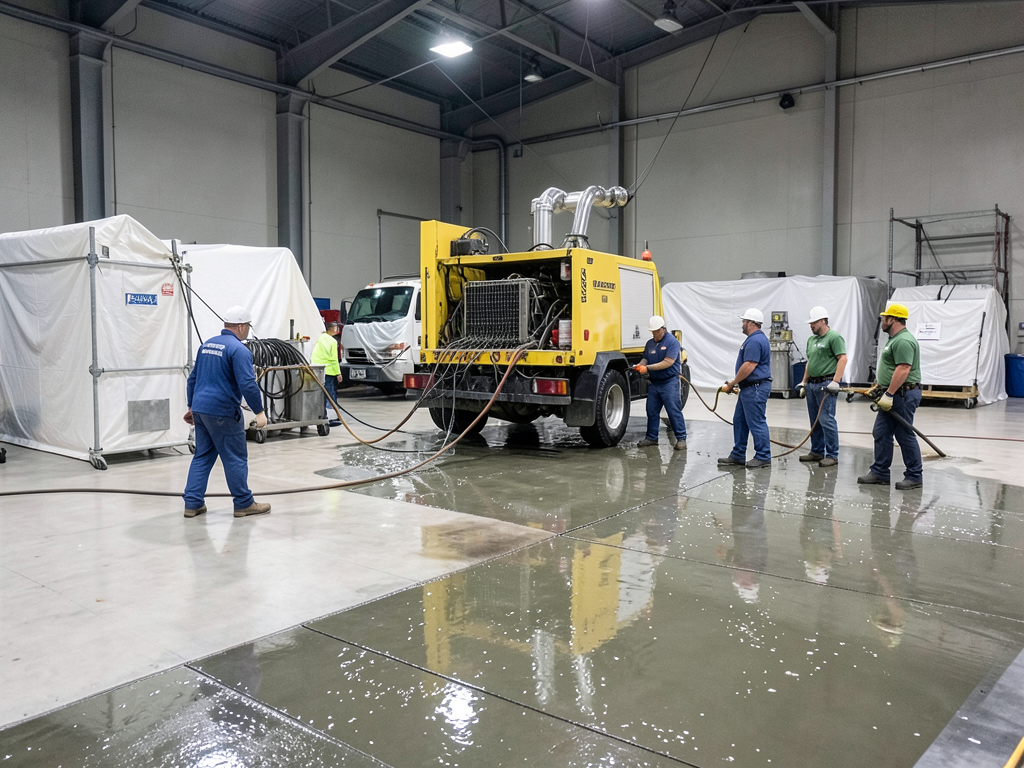
Water extraction in sound stages requires industrial-grade equipment. Standard shop vacuums cannot handle the volume or speed needed. Truck-mounted extraction units can remove thousands of gallons per hour, but their use requires careful coordination to avoid disrupting sensitive equipment. The Best Way to Handle Basement Flooding in Sherman Oaks Right Now.
Moisture mapping becomes critical in sound stage restoration. Using penetrating moisture meters at multiple depths, technicians identify hidden water pockets within walls, under flooring, and in ceiling cavities. Sound stages often have multiple layers of construction materials, each with different moisture absorption rates.
Specialized Equipment for Sound Stage Restoration
Sound stage water damage restoration requires industrial-grade equipment not typically found in standard water damage services. The scale and complexity of these facilities demand specialized tools and techniques.
LGR (Low Grain Refrigerant) dehumidifiers provide the backbone of sound stage drying. These units can remove 20-30 gallons of water per day from the air, crucial for large-volume spaces. Unlike standard dehumidifiers, LGR units operate effectively in cooler temperatures common in sound stages with extensive air conditioning.
Desiccant dehumidifiers offer another level of moisture control. These units use silica gel to absorb moisture and can achieve humidity levels as low as 5%, essential for drying sensitive audio equipment and preventing corrosion in electrical components.
Air movers in sound stages must be strategically placed to create optimal airflow patterns. The goal is to create a vortex effect that pulls moisture from deep within walls and flooring. Standard axial fans cannot generate the pressure needed for this specialized application.
HEPA air scrubbers filter airborne contaminants during the drying process. Sound stages often contain dust, mold spores, and other particulates that can damage sensitive equipment. These units filter particles down to 0.3 microns, ensuring clean air circulation during restoration.
Thermal imaging cameras help identify hidden moisture pockets. These devices detect temperature variations that indicate water presence, allowing technicians to target specific areas without destructive testing. This technology proves invaluable in sound stages where traditional moisture meters might damage expensive finishes.
Business Continuity Planning for Production Facilities
Sound stage water damage mitigation must prioritize business continuity. Unlike residential properties, production facilities operate on schedules where every hour of downtime translates to lost revenue and contractual penalties.
Critical path analysis identifies which areas must be restored first to resume partial operations. For example, if a sound stage has multiple sets, the production currently filming may take priority over sets not yet in use. This strategic approach minimizes overall production disruption.
Equipment relocation protocols protect valuable production gear. Sound stages contain millions in cameras, lighting equipment, and audio gear. Water damage restoration teams must coordinate with production staff to safely move and protect equipment during the mitigation process.
Temporary power solutions allow critical operations to continue during restoration. This might include running temporary electrical feeds to unaffected areas or providing portable power for essential equipment. The goal is maintaining as much production capability as possible while restoration work proceeds.
Insurance documentation becomes crucial for business interruption claims. Detailed documentation of water damage extent, restoration procedures, and production downtime helps facility managers file accurate insurance claims. This documentation must include specific timeframes, equipment affected, and estimated revenue losses.
Category 3 Water Damage in Production Facilities
Category 3 water damage, also known as black water, presents severe risks in sound stages. This contamination level includes sewage, chemical spills, or flood water containing hazardous materials. Burbank sound stages near the Los Angeles River face increased flood risk during heavy rain events.
Category 3 water requires specialized containment procedures. Affected areas must be sealed off using polyethylene sheeting and negative air pressure systems. This prevents cross-contamination to unaffected areas where sensitive equipment might be stored.
Personal protective equipment becomes mandatory for Category 3 incidents. Technicians wear full-body suits, respirators, and chemical-resistant gloves. Sound stages often contain lead-based paint or asbestos in older construction, complicating Category 3 cleanup procedures.
Disposal of Category 3 contaminated materials follows strict protocols. Porous materials like acoustic insulation, drywall, and carpeting must be removed and disposed of as hazardous waste. This process requires coordination with licensed hazardous waste handlers familiar with Burbank’s disposal regulations.
Decontamination procedures after Category 3 water damage involve multiple steps. Surfaces must be cleaned with antimicrobial solutions, then sealed to prevent future mold growth. This process requires specialized knowledge of chemical interactions with sound stage materials.
Moisture Mapping and Structural Assessment
Accurate moisture mapping determines the extent of water damage in sound stages. This process uses multiple diagnostic tools to create a comprehensive picture of affected areas.
Penetrating moisture meters measure moisture content within materials at various depths. For sound stages, this means checking wall cavities, under flooring, and within ceiling structures. Standard moisture readings might show 15% in drywall, but sound stages often contain materials that require different moisture thresholds.
Non-penetrating moisture meters provide surface-level readings without damaging materials. These devices use electromagnetic signals to detect moisture presence. They prove invaluable for checking expensive finishes or historical elements common in Burbank’s older sound stages.
Thermal imaging identifies temperature variations indicating moisture presence. Water evaporation cools surfaces, creating temperature differentials visible on thermal cameras. This technology helps locate hidden moisture without destructive testing, crucial for preserving expensive sound stage finishes.
Structural assessment evaluates whether water damage has compromised building integrity. Sound stages often have suspended ceilings, catwalks, and specialized rigging systems. Water can weaken support structures, creating safety hazards that require immediate attention.
Documentation through moisture mapping creates a baseline for restoration progress. Technicians map affected areas initially, then track moisture level reductions throughout the drying process. This documentation proves essential for insurance claims and quality control verification.
Post-Restoration Safety Inspections
Post-restoration safety inspections verify that sound stages meet operational standards before production resumes. These inspections cover multiple systems to ensure complete restoration.
Electrical system testing confirms that all circuits function correctly after water exposure. This includes checking for corrosion in connections, verifying ground fault circuit interrupter operation, and testing for proper voltage levels. Sound stages often have complex electrical systems that require specialized knowledge.
HVAC system assessment ensures proper air quality and temperature control. Water damage can affect ductwork, air handlers, and filtration systems. Sound stages require precise environmental control for both equipment protection and performer comfort.
Acoustic testing verifies that restoration work hasn’t compromised sound isolation. Sound stages depend on specific acoustic properties, and moisture damage can affect wall assemblies and insulation. Testing confirms that ambient noise levels and sound transmission meet production requirements.
Structural integrity inspection checks for any weakening caused by water exposure. This includes examining support beams, floor systems, and ceiling structures. Sound stages often have specialized construction to support heavy equipment and rigging.
Documentation completion provides facility managers with comprehensive records of the restoration process. This includes before-and-after moisture readings, equipment used, procedures performed, and any materials replaced. These records support insurance claims and future reference.
Insurance and Documentation Requirements
Commercial insurance for sound stages involves complex documentation requirements. Proper documentation during water damage restoration ensures smooth claims processing and maximum coverage.
Detailed inventory of damaged equipment provides insurance adjusters with specific loss information. This includes model numbers, purchase dates, and replacement costs for affected equipment. Sound stages often contain custom or specialized gear that requires detailed documentation.
Time-stamped documentation tracks the progression of damage and restoration efforts. This includes photographs, moisture readings, and technician notes. Insurance companies require this documentation to verify the extent of damage and the necessity of restoration procedures.
Business interruption documentation calculates revenue losses from production delays. This includes scheduled production hours, crew costs, and contractual penalties. Sound stages operate on tight schedules where delays can trigger significant financial penalties.
Compliance documentation ensures that restoration work meets local building codes and industry standards. Burbank sound stages must comply with California Title 24 energy standards and local fire safety regulations. Restoration work must maintain these compliance requirements.
Third-party verification provides additional credibility for insurance claims. Some insurance companies require independent verification of restoration work quality. This might include testing by certified inspectors or documentation from industry associations.
Preventive Maintenance Strategies
Preventive maintenance reduces the risk of water damage in sound stages. Regular inspections and maintenance identify potential problems before they cause significant damage.
Plumbing system inspections check for corrosion, leaks, and pressure issues. Sound stages often have extensive plumbing for restrooms, kitchens, and specialized equipment. Regular inspections identify problems before they cause major damage. Recovering from a Kitchen Leak in Your Encino Home Without the Stress.
Roof inspection and maintenance prevent water intrusion from above. Burbank sound stages have large roof areas that can develop leaks over time. Regular inspections identify damaged flashing, clogged drains, or deteriorating roofing materials.
HVAC system maintenance prevents condensation-related water damage. Sound stages require precise temperature and humidity control. Regular maintenance ensures that condensate lines function properly and that moisture doesn’t accumulate in equipment.
Fire suppression system testing ensures proper operation without leaks. Sound stages have extensive fire suppression systems that can malfunction and cause water damage. Regular testing identifies problems before they cause incidents.
Emergency response planning prepares staff for water damage incidents. This includes establishing communication protocols, identifying shut-off valves, and training key personnel on initial response procedures. Quick response can significantly reduce damage extent.
Frequently Asked Questions
How quickly should we respond to water damage in a sound stage?
Response time should be within 60 minutes for Category 1 water and immediately for Category 3 water. The first hour determines whether production can resume within hours or face weeks of delays. Quick response prevents secondary damage and reduces overall restoration costs.
What makes sound stage water damage different from residential water damage?
Sound stages contain specialized equipment, complex electrical systems, and unique construction materials. The business interruption costs are much higher, and the restoration must preserve acoustic properties and maintain compliance with production schedules. Standard water damage techniques often don’t apply.
Can we continue production in unaffected areas during restoration?
Yes, with proper planning. Critical path analysis identifies which areas can remain operational while restoration proceeds in affected zones. Temporary power solutions and equipment relocation allow partial operations to continue, minimizing revenue losses.
How do we handle insurance claims for sound stage water damage?
Detailed documentation is essential. This includes inventory of damaged equipment, time-stamped damage progression photos, business interruption calculations, and compliance verification. Working with restoration companies experienced in commercial insurance claims streamlines the process.
What equipment is essential for sound stage water damage restoration?
LGR dehumidifiers, desiccant dehumidifiers, industrial air movers, HEPA air scrubbers, thermal imaging cameras, and moisture meters are essential. Truck-mounted extraction units and specialized drying equipment handle the scale and complexity of sound stage restoration.
Call for Immediate Assistance
Water damage in Burbank sound stages requires immediate professional attention. Our IICRC-certified technicians specialize in entertainment industry restoration with 24/7 emergency response. We understand the unique challenges of sound stage restoration and work to minimize production downtime while protecting your valuable equipment. IICRC S500 Standard for Professional Water Damage Restoration.
Don’t let water damage halt your production schedule. Call (209) 255-2558 now for rapid response and expert restoration services. Our team arrives within 60 minutes with industrial-grade equipment and the experience to handle Burbank’s most complex water damage scenarios.
Every minute counts when water threatens your sound stage operations. Pick up the phone and call (209) 255-2558 before the next storm hits. We’ll help you protect your investment and get your production back on schedule.
{
“@context”: “https://schema.org”,
“@type”: “BlogPosting”,
“headline”: “Water Damage Mitigation Strategies for Sound Stages and Production Facilities in Burbank”,
“description”: “Specialized water damage mitigation for Burbank sound stages and production facilities. 24/7 emergency response for entertainment industry with IICRC-certified technicians.”,
“wordCount”: 2357,
“datePublished”: “2026-06-12T12:31:00.000Z”,
“dateModified”: “2026-06-12T12:31:00.000Z”,
“inLanguage”: “en-US”,
“mainEntityOfPage”: {
“@type”: “WebPage”,
“@id”: “https://unitedwaterdamagerestorationlosangeles.com”
},
“publisher”: {
“@type”: “LocalBusiness”,
“name”: “United Water Damage Restoration Los Angeles”,
“url”: “https://unitedwaterdamagerestorationlosangeles.com”
},
“author”: {
“@type”: “Organization”,
“name”: “United Water Damage Restoration Los Angeles”,
“url”: “https://unitedwaterdamagerestorationlosangeles.com”
},
“image”: {
“@type”: “ImageObject”,
“url”: “https://unitedwaterdamagerestorationlosangeles.com/wp-content/uploads/2026/03/water-damage-mitigation-strategies-for-sound-stage-1.png”
}
}
{
“@context”: “https://schema.org”,
“@type”: “LocalBusiness”,
“name”: “United Water Damage Restoration Los Angeles”,
“url”: “https://unitedwaterdamagerestorationlosangeles.com”,
“address”: {
“@type”: “PostalAddress”,
“addressLocality”: “Los Angeles”
},
“areaServed”: {
“@type”: “City”,
“name”: “Los Angeles”
}
}
{
“@context”: “https://schema.org”,
“@type”: “FAQPage”,
“mainEntity”: [
{
“@type”: “Question”,
“name”: “How quickly should we respond to water damage in a sound stage?”,
“acceptedAnswer”: {
“@type”: “Answer”,
“text”: “Response time should be within 60 minutes for Category 1 water and immediately for Category 3 water. The first hour determines whether production can resume within hours or face weeks of delays. Quick response prevents secondary damage and reduces overall restoration costs.”
}
},
{
“@type”: “Question”,
“name”: “What makes sound stage water damage different from residential water damage?”,
“acceptedAnswer”: {
“@type”: “Answer”,
“text”: “Sound stages contain specialized equipment, complex electrical systems, and unique construction materials. The business interruption costs are much higher, and the restoration must preserve acoustic properties and maintain compliance with production schedules. Standard water damage techniques often don’t apply.”
}
},
{
“@type”: “Question”,
“name”: “Can we continue production in unaffected areas during restoration?”,
“acceptedAnswer”: {
“@type”: “Answer”,
“text”: “Yes, with proper planning. Critical path analysis identifies which areas can remain operational while restoration proceeds in affected zones. Temporary power solutions and equipment relocation allow partial operations to continue, minimizing revenue losses.”
}
},
{
“@type”: “Question”,
“name”: “How do we handle insurance claims for sound stage water damage?”,
“acceptedAnswer”: {
“@type”: “Answer”,
“text”: “Detailed documentation is essential. This includes inventory of damaged equipment, time-stamped damage progression photos, business interruption calculations, and compliance verification. Working with restoration companies experienced in commercial insurance claims streamlines the process.”
}
},
{
“@type”: “Question”,
“name”: “What equipment is essential for sound stage water damage restoration?”,
“acceptedAnswer”: {
“@type”: “Answer”,
“text”: “LGR dehumidifiers, desiccant dehumidifiers, industrial air movers, HEPA air scrubbers, thermal imaging cameras, and moisture meters are essential. Truck-mounted extraction units and specialized drying equipment handle the scale and complexity of sound stage restoration.”
}
}
]
}
{
“@context”: “https://schema.org”,
“@type”: “BreadcrumbList”,
“itemListElement”: [
{
“@type”: “ListItem”,
“position”: 1,
“name”: “Home”,
“item”: “https://unitedwaterdamagerestorationlosangeles.com”
},
{
“@type”: “ListItem”,
“position”: 2,
“name”: “Blog”,
“item”: “https://unitedwaterdamagerestorationlosangeles.com/blog”
},
{
“@type”: “ListItem”,
“position”: 3,
“name”: “Water Damage Mitigation Strategies for Sound Stages and Production Facilities in Burbank”
}
]
}
{
“@context”: “https://schema.org”,
“@type”: “Service”,
“serviceType”: “Water Damage Restoration”,
“provider”: {
“@type”: “LocalBusiness”,
“name”: “United Water Damage Restoration Los Angeles”,
“url”: “https://unitedwaterdamagerestorationlosangeles.com”
},
“areaServed”: {
“@type”: “City”,
“name”: “Los Angeles”
},
“description”: “Specialized water damage mitigation for Burbank sound stages and production facilities. 24/7 emergency response for entertainment industry with IICRC-certified technicians.”
}