




menu

School & University Restoration in Los Angeles – Minimizing Downtime and Protecting Academic Continuity

United Water Damage Restoration Los Angeles delivers rapid educational facility water damage restoration with minimal disruption to classes, research operations, and campus infrastructure across the greater Los Angeles metro area.

Slider Image 1
Slider Image 2
Slider Image 3
Slider Image 4
Slider Image 5
Slider Image 7
Slider Image 8
Slider Image 9
Slider Image 10
Slider Image 11

Water Damage Threatens Academic Operations Across Los Angeles Campuses

Educational institutions across Los Angeles face unique water damage risks that threaten operational continuity and liability exposure. The region's aging infrastructure, combined with seasonal storm patterns and seismic activity, creates vulnerabilities in buildings ranging from historic university halls to modern research facilities.

A single pipe burst in a dormitory can displace hundreds of students. Roof leaks in library archives destroy irreplaceable academic resources. Flooded laboratories halt critical research programs. HVAC system failures in administrative buildings compromise sensitive records and IT infrastructure.

Los Angeles school districts and universities operate under strict building codes and health regulations. Water intrusion creates mold exposure risks that trigger occupational safety concerns and potential Title IX liability when student housing is compromised. The California Education Code requires immediate remediation of environmental hazards that threaten student welfare.

Campus water damage often affects multiple building systems simultaneously. Water migrates through shared utility corridors, compromising electrical systems, data networks, and HVAC infrastructure. What appears as a localized leak frequently indicates systemic failure requiring comprehensive academic building water damage repair.

Educational facilities cannot afford extended closures. Every day of interrupted operations represents lost tuition revenue, delayed research timelines, and potential accreditation issues. University flood cleanup services must restore function quickly while maintaining the integrity of specialized environments like clean rooms, computer labs, and historic preservation areas.

The scale of educational facility water damage restoration demands specialized capacity. A university campus requires coordinated response across multiple buildings, often while classes continue in adjacent structures. This differs fundamentally from residential restoration work.

Water Damage Threatens Academic Operations Across Los Angeles Campuses
Commercial-Grade Campus Water Remediation Protocol

Commercial-Grade Campus Water Remediation Protocol

School disaster recovery services require a different approach than residential water damage work. Educational institutions need large-scale extraction capacity, industrial drying equipment, and project management capable of coordinating work across active campus environments.

Our college campus water remediation begins with a comprehensive assessment of affected building systems. We map water migration paths through utility corridors, identify compromised structural components, and document damage for insurance claims and regulatory compliance. This assessment phase includes moisture mapping using thermal imaging and hygrometry to detect hidden saturation in wall cavities and ceiling plenum spaces.

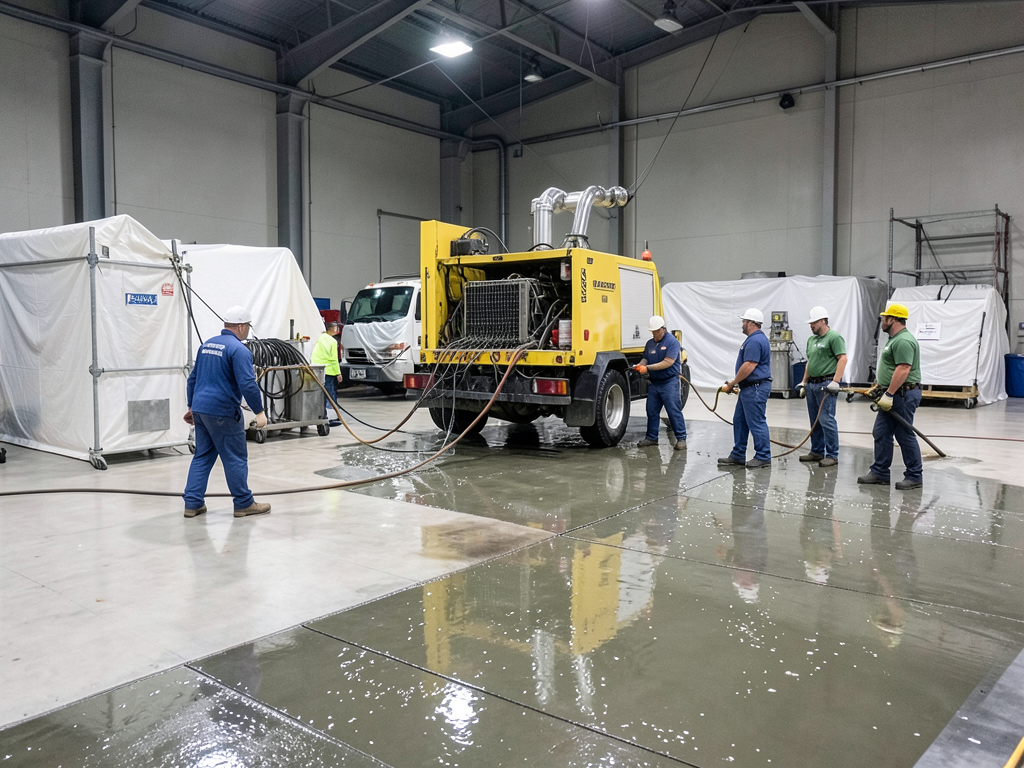
Water extraction in educational facilities requires high-capacity truck-mounted equipment and trailer-mounted generators to avoid overloading campus electrical systems. We deploy commercial-grade air movers and LGR dehumidifiers sized for large open spaces like gymnasiums, cafeterias, and lecture halls. Desiccant dehumidifiers handle specialized environments where temperature and humidity control matters, such as computer server rooms and museum collections.

Containment protocols prevent cross-contamination between remediation zones and occupied campus areas. We establish negative air pressure chambers with HEPA filtration when working in buildings that remain partially operational. This allows classes to continue in unaffected wings while restoration proceeds in damaged sections.

Our approach includes coordination with campus facilities management, environmental health and safety departments, and academic scheduling offices. We work around class schedules, research timelines, and campus events to minimize disruption. Night and weekend shifts allow aggressive drying and reconstruction in high-traffic areas without interfering with daytime operations.

Documentation meets the requirements of institutional risk management offices and insurance carriers. We provide detailed moisture logs, photographic evidence, and chain-of-custody records for any materials requiring specialized handling or disposal under environmental regulations.

Campus Restoration Project Phases

School & University Restoration in Los Angeles – Minimizing Downtime and Protecting Academic Continuity
01

Emergency Response and Assessment

Our team deploys within hours of notification to secure the affected area and prevent secondary damage. We conduct a rapid building systems assessment to identify immediate safety hazards like electrical risks or structural compromise. Water is extracted, and temporary power and climate control systems are established. We document pre-existing conditions and create a detailed scope of work for insurance review and campus administration approval.
02

Controlled Drying and Monitoring

Industrial drying equipment runs on scheduled cycles coordinated with campus operations. We monitor moisture levels twice daily using penetrating moisture meters and document progress with thermal imaging. Air quality testing confirms the absence of microbial growth during the drying process. HVAC systems are inspected and cleaned to prevent mold spore distribution. This phase typically requires five to ten days depending on material saturation levels and building construction.
03

Reconstruction and Clearance Testing

Once moisture levels return to normal ranges, reconstruction begins on damaged building components. We coordinate with campus trades for electrical, plumbing, and HVAC system repairs. Final environmental testing confirms the space meets occupancy standards before students or staff return. We provide campus facilities management with as-built documentation showing any infrastructure changes made during restoration. The space is released for occupancy with a detailed completion report for institutional records.

Los Angeles Educational Facility Restoration Expertise

United Water Damage Restoration Los Angeles understands the regulatory environment governing educational facilities in Los Angeles County. We work within California Title 24 building standards and DSA approval requirements for K-12 facilities. University projects comply with campus building codes that often exceed standard commercial requirements.

Los Angeles educational institutions include everything from downtown community colleges to sprawling university campuses in Westwood and USC's University Park area. We have restored water damage in buildings ranging from 1920s Mediterranean Revival structures to modern LEED-certified research facilities. Each architectural style presents different restoration challenges requiring specific technical knowledge.

Our capacity scales to match institutional needs. A single flooded classroom receives the same attention to detail as a catastrophic pipe burst affecting an entire residence hall. We maintain equipment inventory and staffing levels sufficient to handle multi-building campus emergencies without compromising response times for other clients.

Insurance coordination for educational institutions differs from residential claims processing. We work directly with risk management offices and third-party administrators who handle institutional coverage. Our documentation meets the requirements of public entity insurance pools and private carriers covering independent schools and universities.

Campus restoration often involves specialized content affected by water damage. We coordinate with conservators for archival materials, arrange for data recovery services when server rooms flood, and work with lab managers to assess damaged research equipment. This requires understanding the value and replaceability of academic assets beyond standard building components.

Los Angeles's position as an earthquake zone means many campus buildings have been retrofitted with seismic upgrades. Water damage restoration in these structures requires awareness of how modern seismic bracing and base isolation systems interact with water intrusion. We avoid compromising structural upgrades during the restoration process.

Educational Facility Restoration Details

Rapid Response Capacity

Educational facility emergencies receive priority dispatch with equipment and personnel mobilized within two hours of initial contact. Our response capacity includes multiple truck-mounted extraction units, trailer-mounted generators, and industrial drying equipment sufficient to handle large campus buildings. Emergency response crews are available around the clock, including during summer break, winter recess, and holiday periods when campus facilities staffing may be reduced. We maintain direct communication channels with campus police and facilities management for after-hours emergencies requiring building access and utility shutoffs.

Comprehensive Damage Assessment

Initial campus assessments include documentation of affected spaces, building systems analysis, and preliminary cost estimates for insurance purposes. We use moisture mapping technology to identify water migration patterns through shared utility corridors and concealed building cavities. Assessment reports include photographic documentation, moisture readings, and recommendations for temporary protective measures. For projects requiring environmental testing, we coordinate with certified industrial hygienists and provide lab results to campus environmental health and safety departments. Assessment findings are presented in formats compatible with institutional procurement and insurance claim procedures.

Minimal Operational Disruption

Restoration work schedules coordinate with academic calendars and campus event schedules to minimize disruption. We establish containment barriers allowing restoration to proceed in damaged areas while adjacent spaces remain operational. Night and weekend shifts handle work in high-traffic areas like student unions and administrative offices. Equipment placement considers pedestrian traffic patterns and accessibility requirements. Final spaces are delivered ready for immediate occupancy with all building systems tested and operational. We work within institutional timelines for residence hall turnovers between academic terms and classroom availability for start of semester.

Documentation and Compliance

Project documentation meets institutional record-keeping requirements and insurance claim standards. We provide daily moisture logs, progress photographs, and equipment deployment records throughout the restoration process. Final deliverables include completion certificates, environmental clearance testing results, and as-built documentation for any building system modifications. Our records comply with California public records act requirements for work performed at state institutions. We maintain project files for the duration required by institutional retention policies and provide digital copies compatible with campus facilities management software systems.

Frequently Asked Questions

You Have Questions,
We Have Answers

How Los Angeles Campus Infrastructure and Climate Patterns Impact Educational Facility Water Damage

Los Angeles educational institutions face water damage risks driven by the region's aging campus infrastructure and seasonal weather patterns. Many university buildings date to the early 20th century, with original plumbing systems that have exceeded their design life. Winter storms overwhelm outdated roof drainage systems, while summer heat stress causes domestic water line failures. The region's seismic activity creates hidden pipe joint separations that manifest as slow leaks compromising building envelopes over time. Campus expansion has often occurred without upgrading central utility systems, creating pressure imbalances that accelerate wear on distribution piping throughout older academic buildings.

Educational facility water damage restoration in Los Angeles requires familiarity with California building codes and institutional compliance requirements specific to schools and universities. Los Angeles County Health Department regulations govern mold remediation in occupied educational facilities, requiring specific clearance testing before spaces can be returned to use. State fire marshal requirements affect temporary power installations during emergency response. We work within these regulatory frameworks while maintaining the urgent timelines educational institutions require. Our experience across Los Angeles campuses, from community colleges in the San Fernando Valley to private universities in Westchester, provides the local knowledge needed to navigate institutional procedures and deliver compliant restoration services.

Water Damage Restoration Services in The Los Angeles Area

United Water Damage Restoration Los Angeles is proud to service the entire Los Angeles area and surrounding communities. View our central location on the map to see our strategic positioning, which enables us to provide our guaranteed rapid response times across the region. If you need immediate assistance, please do not drive to our office; instead, call our 24/7 emergency hotline, and our fully-equipped team will be dispatched directly to your property without delay.

Address:
United Water Damage Restoration Los Angeles, 5800 S Eastern Ave, Los Angeles, CA, 90040

Additional Services We Offer

Our news updates

Latest Articles & News from The Blogs

What to Do When Your Wilmington Water Heater Floods Your Laundry Room A leaking water heater can release 40 to…

What to Do When Your Wilmington Water Heater Floods Your Laundry Room

What to Do When Your Wilmington Water Heater Floods Your Laundry Room A leaking water heater can release 40 to…

Getting Your West Hills Home Ready for the Los Angeles Rainy Season

Getting Your West Hills Home Ready for the Los Angeles Rainy Season The Santa Susana Mountains loom over West Hills…

Common Plumbing Problems in Miracle Mile Older Condo Buildings

Common Plumbing Problems in Miracle Mile Older Condo Buildings Miracle Mile’s charming historic condo buildings come with unique plumbing challenges…

Contact Us

Educational facility water damage requires immediate professional response to minimize operational disruption and liability exposure. Contact United Water Damage Restoration Los Angeles at (209) 255-2558 for rapid campus restoration services available around the clock.